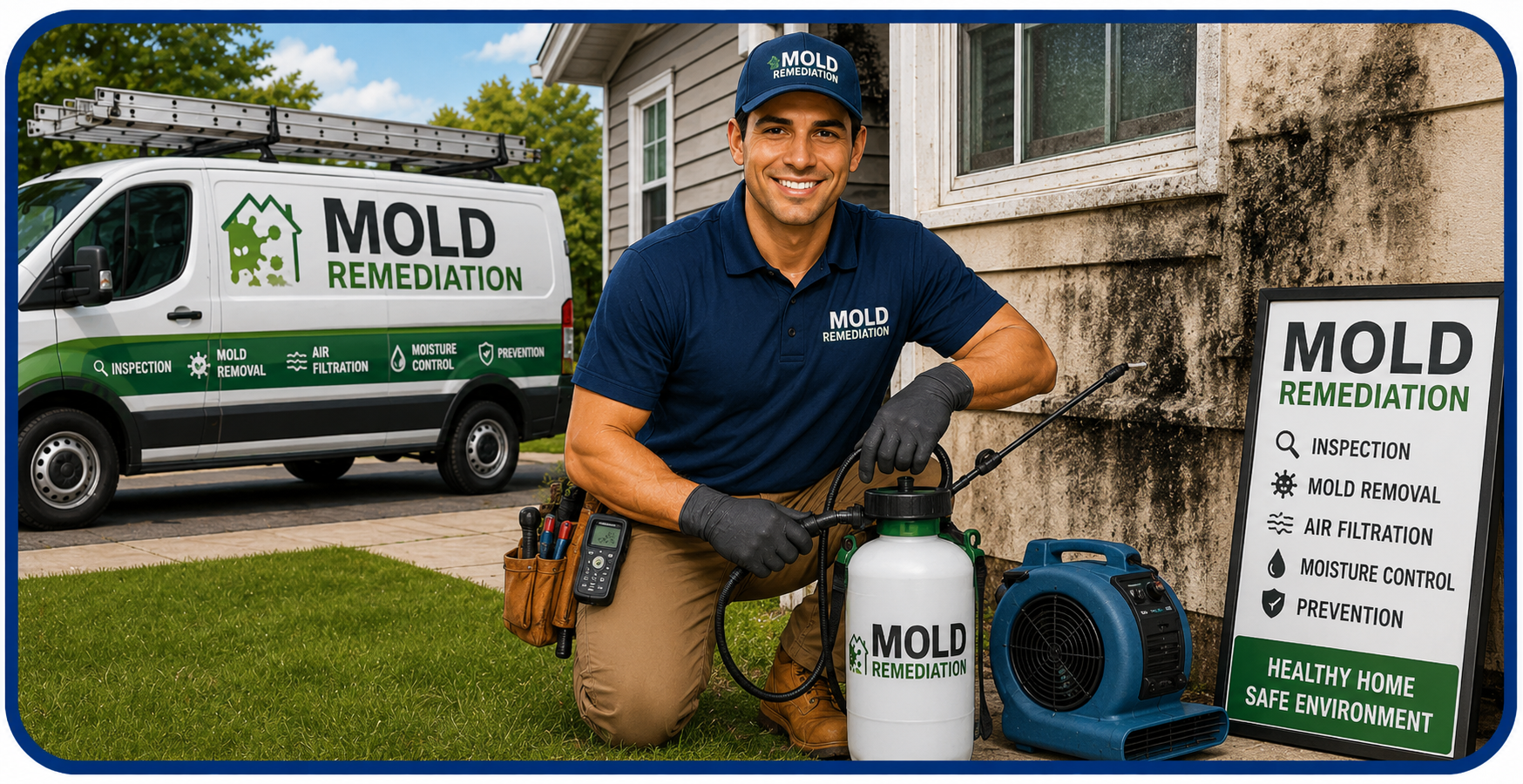
Black mold is not the same as ordinary household mold. Stachybotrys chartarum produces mycotoxins that accumulate on surfaces and in air — and it requires a completely different remediation protocol than surface-level mold growth. If you see dark, slimy patches or smell that characteristic earthy-musty odor in Bennett, do not attempt to clean it yourself. Call our certified team immediately.
If any of these are present in your Bennett property, call immediately — mycotoxin exposure is a health emergency.
Our technicians hold active IICRC certification specifically for mold remediation, ensuring every Bennett project follows the published standard for Stachybotrys removal.
Black mold emergencies do not wait for business hours. Our Bennett dispatch line operates 24 hours a day, seven days a week — real team members, not an answering service.
Every project in Bennett starts with an itemized written estimate. No work begins until you approve the scope and cost — and the written figure is what you pay.
HEPA air scrubbers, negative pressure containment, ATP surface testing, and EPA-registered antimicrobial treatments — the full kit required for black mold, deployed on every Bennett project.
Stachybotrys chartarum — what most people call black mold — develops in conditions of sustained, heavy moisture. Unlike Cladosporium or Penicillium, which can grow on relatively dry surfaces, Stachybotrys requires materials saturated for an extended period: flood-damaged drywall left untreated for days, chronically leaking pipe chases, or basement concrete block walls with persistent groundwater intrusion. By the time most Bennett homeowners see visible black mold colonies, the contamination has typically been developing for weeks or months — which is why standard surface cleaning is never adequate.
The mycotoxins produced by Stachybotrys chartarum — trichothecenes in particular — bind to organic particles and surfaces. They do not simply evaporate or dry away. Disturbing a black mold colony without proper HEPA containment releases a concentrated burst of contaminated particles into the air, which then settle throughout the building and embed in soft furnishings, HVAC filter media, and unsealed surfaces. This is why our Bennett Black Mold Remediation protocol always begins with establishing full negative pressure containment before any physical remediation begins.
Our certified technicians start every Bennett black mold project with a comprehensive moisture mapping assessment using calibrated meters and thermal imaging. The goal is to identify the full extent of contamination — including materials that appear visually clean but register elevated moisture — before establishing the remediation scope. We do not guess at boundaries. We measure, document, and contain based on objective data, then complete the removal and EPA-registered antimicrobial treatment, followed by post-remediation air sampling with third-party laboratory analysis to confirm clearance before any reconstruction begins.
The written clearance report we deliver at the end of every Bennett project is formatted to meet the documentation requirements of insurance carriers, real estate transaction parties, and CO property health authorities. If you need to file a claim, sell a Bennett property, or simply have a documented record that the problem has been fully resolved, that report is what you need — and it is a standard deliverable on every project we complete.
Black mold remediation in Bennett, CO requires containment, HEPA filtration, and clearance testing — not bleach. Attempting surface cleaning without these measures will disturb the colony and spread contamination further. Call +1-844-692-0486 before taking any action.
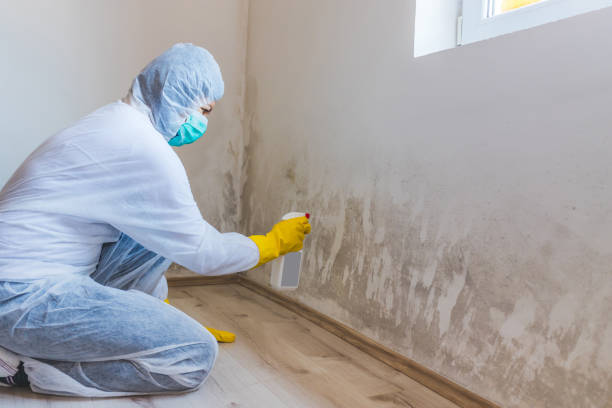
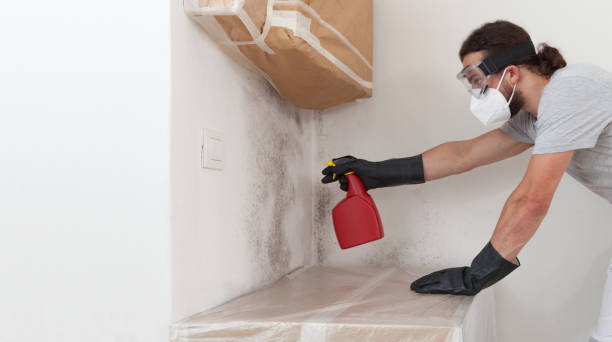
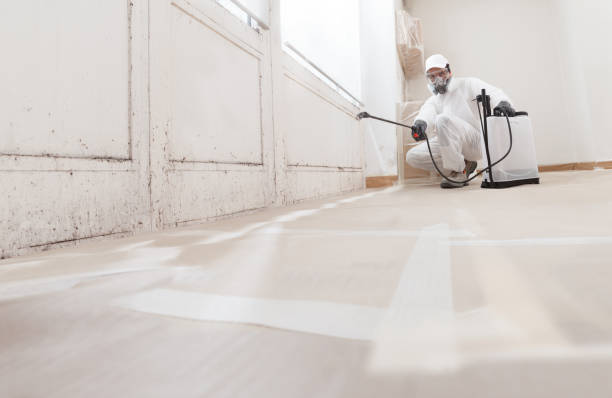
Every service below is part of our complete Stachybotrys remediation protocol — not optional add-ons, but required steps for a proper black mold removal project in Bennett.
Surface sampling, air sampling, and moisture mapping to confirm Stachybotrys chartarum, establish exact contamination boundaries, and document baseline conditions in your Bennett property before remediation begins.
Full physical containment of the affected area with poly barriers and HEPA-filtered negative pressure machines to prevent cross-contamination throughout the unaffected portions of your Bennett building during remediation.
Safe removal and double-bagged disposal of contaminated drywall, insulation, subflooring, and framing according to IICRC S520 protocol and applicable CO disposal regulations.
HEPA vacuum of all surfaces within the containment zone, followed by EPA-registered antimicrobial application and encapsulant treatment to address residual contamination on surfaces that cannot be removed.
Independent third-party air sampling after work is complete, with laboratory analysis confirming spore counts have returned to acceptable levels. Written clearance report provided for insurance and real estate purposes.
Identification and correction of the moisture intrusion pathway that enabled black mold growth — because without addressing the source, any remediation is temporary. Moisture control is the foundation of preventing recurrence in Bennett.
From your call to a documented clearance result — here is exactly what happens at every Bennett project.
Call +1-844-692-0486 and speak to a live team member. We dispatch a certified technician to your Bennett property immediately — same day for confirmed black mold situations.
Our technician arrives at your Bennett property equipped with moisture meters, thermal imaging, air sampling equipment, and full containment materials — ready to assess on arrival.
Full moisture mapping and sampling to determine scope, followed by a detailed written estimate with itemized costs. No work begins until you approve — no pressure, no obligation.
IICRC-protocol black mold removal, EPA-registered treatment, post-remediation air testing, and written clearance documentation — your Bennett property is certified clean and the documentation proves it.
"We found black mold behind our bathroom wall after a slow pipe leak. The smell had been bothering us for weeks before we figured out what it was. 247 Mold Remediation sent a technician within a few hours of our call, did full containment, tested the air before and after, and gave us a proper clearance report. The team explained every step. I would not have trusted anyone else with something this serious."
"I am a property manager and had to deal with a serious black mold situation in one of my units after a tenant reported health symptoms. 247 Mold Remediation handled it completely — containment, removal, clearance testing, and a full written report. They worked around the tenant's schedule and the documentation they provided satisfied my insurance carrier on the first submission. Professional operation from start to finish."
"We had Stachybotrys confirmed in our basement after flooding. I had gotten two other quotes that did not include containment or clearance testing — they just wanted to spray and paint over it. 247 Mold Remediation did the actual protocol, tested afterward, and gave us documentation showing the spore levels were back to normal. That is what real black mold remediation looks like."
Visual identification alone is not reliable — dark mold growth can be Cladosporium, Aspergillus niger, or other species that are not Stachybotrys chartarum, and some Stachybotrys growth is greenish-gray rather than the classic dark black. The only definitive identification is surface sampling or air sampling with laboratory analysis. If you see persistent dark growth in a chronically damp area of your Bennett property, treat it as a potential black mold situation until testing confirms otherwise. Call +1-844-692-0486 and we will assess the situation with professional sampling equipment on our first visit.
Stachybotrys chartarum produces mycotoxins — specifically trichothecene compounds — that are associated with respiratory symptoms, headaches, fatigue, and in high-exposure situations, more serious health effects. The risk level depends on the extent of contamination, how long the exposure has been occurring, and the health profile of the occupants. Young children, elderly individuals, people with asthma or compromised immune systems, and pregnant women face higher risk. We take a precautionary approach: if confirmed or suspected black mold is present in living areas, we recommend temporary relocation during remediation. Call us at +1-844-692-0486 and we will give you an honest assessment of the risk level in your specific Bennett situation.
This is one of the most dangerous approaches to Stachybotrys contamination. Bleach can lighten the visible surface appearance of black mold but does not penetrate porous materials where the hyphae and mycotoxins are embedded. More critically, disturbing a black mold colony without HEPA containment releases a concentrated burst of spores and mycotoxin-bearing particles into the air, which then settle throughout your Bennett home and embed in carpets, upholstery, HVAC filters, and wall cavities. You can make the air quality situation significantly worse while creating the impression that you have addressed the problem. Professional IICRC-protocol remediation with proper containment is the only approach that actually resolves a black mold contamination in Bennett homes.
Coverage depends on the cause and your specific policy. Mold resulting from a sudden, covered water loss — a burst pipe, an appliance failure, certain storm-related water intrusion — is frequently covered subject to any mold sub-limits in your policy. Mold resulting from chronic moisture intrusion, maintenance neglect, or gradual leaks that went unaddressed is typically excluded. We will give you an honest assessment of your coverage situation before you file, and we provide all documentation in the formats required by insurance adjusters. Many of our Bennett clients receive partial or full coverage for projects we complete.
Project duration depends on the extent of contamination and how much structural material needs to be removed. A contained situation in a single room — say, a bathroom wall cavity — typically takes one to two days of active remediation plus 24-48 hours for post-remediation air sampling results to come back from the lab. A larger-scale situation involving multiple rooms or extensive structural material removal can take three to five days of active work. We will give you a specific timeline estimate for your Bennett property after our initial assessment, and we will keep you updated throughout the project.
Every completed project in Bennett includes a written close-out package with the post-remediation air sampling results, the third-party laboratory report, a written summary of the remediation scope performed, before and after documentation of affected areas, and a signed statement of project completion. This package is formatted for insurance carrier submission, real estate disclosure purposes, and CO property documentation requirements. The clearance test is performed only after all remediation work is complete and the area has been thoroughly cleaned — we do not perform the test until we are confident it will pass.
24/7 emergency dispatch, free on-site inspection, IICRC-certified technicians, and full clearance documentation for every Bennett project.